You've booked — or you're about to book — an aerial tour of Oahu. The question that quietly decides whether you get an okay flight or a transcendent one is a question most booking forms never ask: what time?
The difference between a 9am flight and a 2pm flight isn't just the position of the sun. It's the wind picking up across the Ko'olau range. It's the way the reef water goes from glass-clear to wind-rippled. It's the quality of the light on Diamond Head, the crowds at Dillingham Airfield, the behavior of turtles in the shallows. Timing is everything.
Here's a photographer's breakdown of every hour of the day on Oahu, what each one gives you, what each one costs you, and the hour that genuinely belongs to the open cockpit.
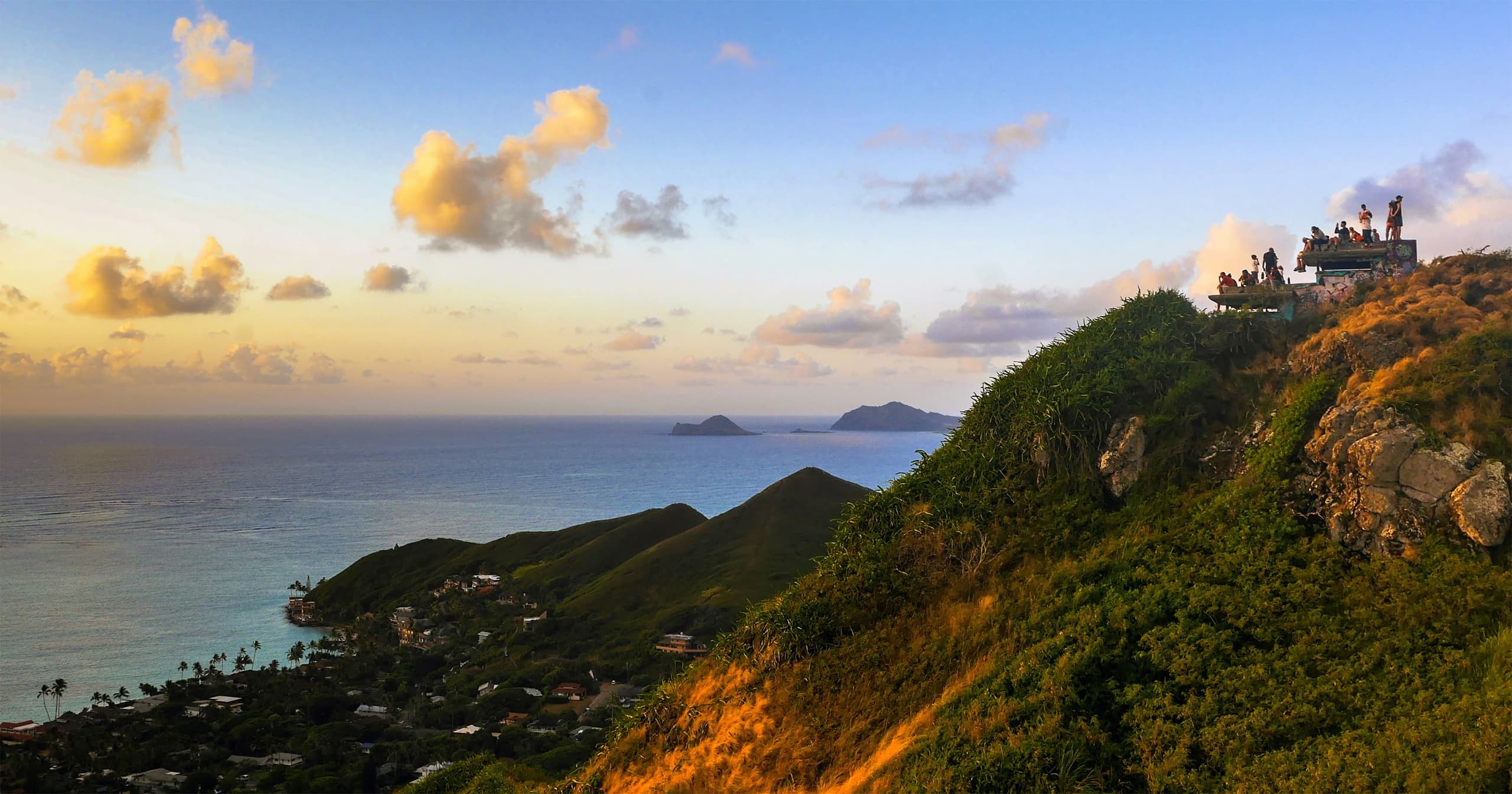
Sunrise (5:50–7:10am): The Quiet Hour
If you can do it, do it. Sunrise on Oahu is the calmest air you'll find all day. The trade winds haven't started pressing against the eastern cliffs yet. The ocean is often completely still — a glass surface stretching out to the horizon. The Ko'olau range is silhouetted against the first light from the east, its ridgeline sharp and dramatic, while the North Shore sits in cool blue shadow.
What you gain: soft golden light, empty skies (very few tour aircraft up this early), best chance of spotting sea turtles near the reef in undisturbed water, the psychological thing of being in motion while the island is still asleep.
What you pay: a 5am wake-up. Fewer operators fly true sunrise departures — you'll need to book ahead and check specifically. If you're fighting jet lag from the mainland, though, early hours are actually easy. Your body still thinks it's late morning.
Mid-Morning (8:00–10:00am): The Photographer's Hour
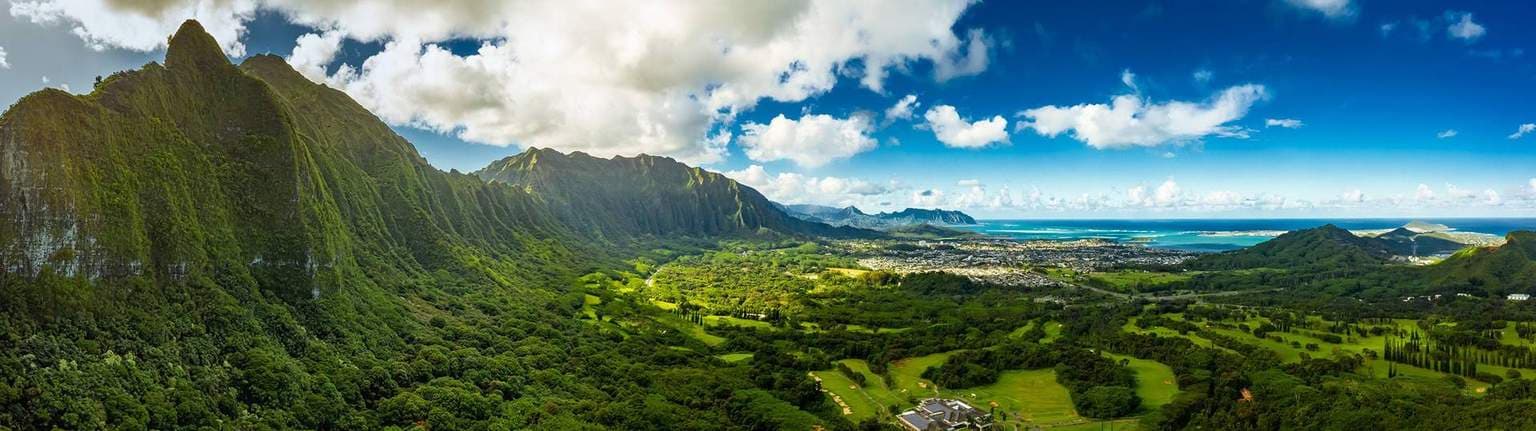
If we had to pick one window for the broadest visitor appeal, this is it. The sun is high enough to fully illuminate the reef, the water is still calm, the air hasn't warmed up enough to produce thermal turbulence, and the trade winds are typically still light. Visibility is at its best. You can see the full texture of the sea floor in water 40 feet deep — individual coral heads, sand channels, the dark shapes of turtles moving through the shallows.
The light hits the Ko'olau mountains from the side, carving out every ridge and valley in sharp relief. Diamond Head glows warm from the east side. The North Shore reef shines turquoise over white sand. This is the hour of the postcard shot.
Book this window if your priority is clarity and detail — what you can actually see — rather than warm, dramatic light. Golden hour wins on atmosphere. Mid-morning wins on sharpness, reef color, and honest visibility.
Midday (10:00am–2:00pm): The Compromise Hour
Midday flights aren't bad. They're just the weakest of the options. Here's what happens: the sun moves high overhead, flattening the landscape and washing out detail. Shadows disappear from the mountains. Harsh contrast in your photos — bright water, dark cliffs — becomes nearly impossible to balance even with a modern camera.
On top of that, the trade winds pick up through late morning and peak in the early afternoon. Thermals rising off the warm interior of the island produce bumpier rides. Tour traffic is at its heaviest — you'll share the airspace with every other helicopter and sightseeing aircraft on Oahu. Booking slots are crowded.
When midday is the right call: if your day is already committed to mornings and evenings and the only time you can make the drive out to Dillingham or Honolulu is the middle of the day, book it. The views are still Oahu. The light is still Hawaii. But Given the choice, pick another window.
Late Afternoon (3:00–5:00pm): The West-Side Glow
Something happens to Oahu in the late afternoon that's worth planning around. As the sun drops toward the west, it lights up the Waianae range along the North Shore in warm sidelight — the ridgelines turn gold, valleys deepen into shadow, and the reef water shifts from bright turquoise to a richer, more saturated blue. On a full-island helicopter loop, the western slopes of the Ko'olau range on the Honolulu side also catch the low sun, while the famous fluted eastern cliffs (which glow in the morning, lit from the east) fall into deep shadow.
This is when the island looks the most dramatic. The sidelight picks out every ridgeline. Waterfalls deep in the valleys catch the last of the direct sun. The reef water, still visible, goes from bright turquoise to a deeper, richer blue.
The trade-off is wind and crowds. Late afternoon is peak booking season — slots fill out weeks in advance during summer and holidays. The wind can be more aggressive, though a good operator will still fly. Expect your ride to be slightly bumpier than morning.
Golden Hour & Sunset: The Money Shot (With a Catch)
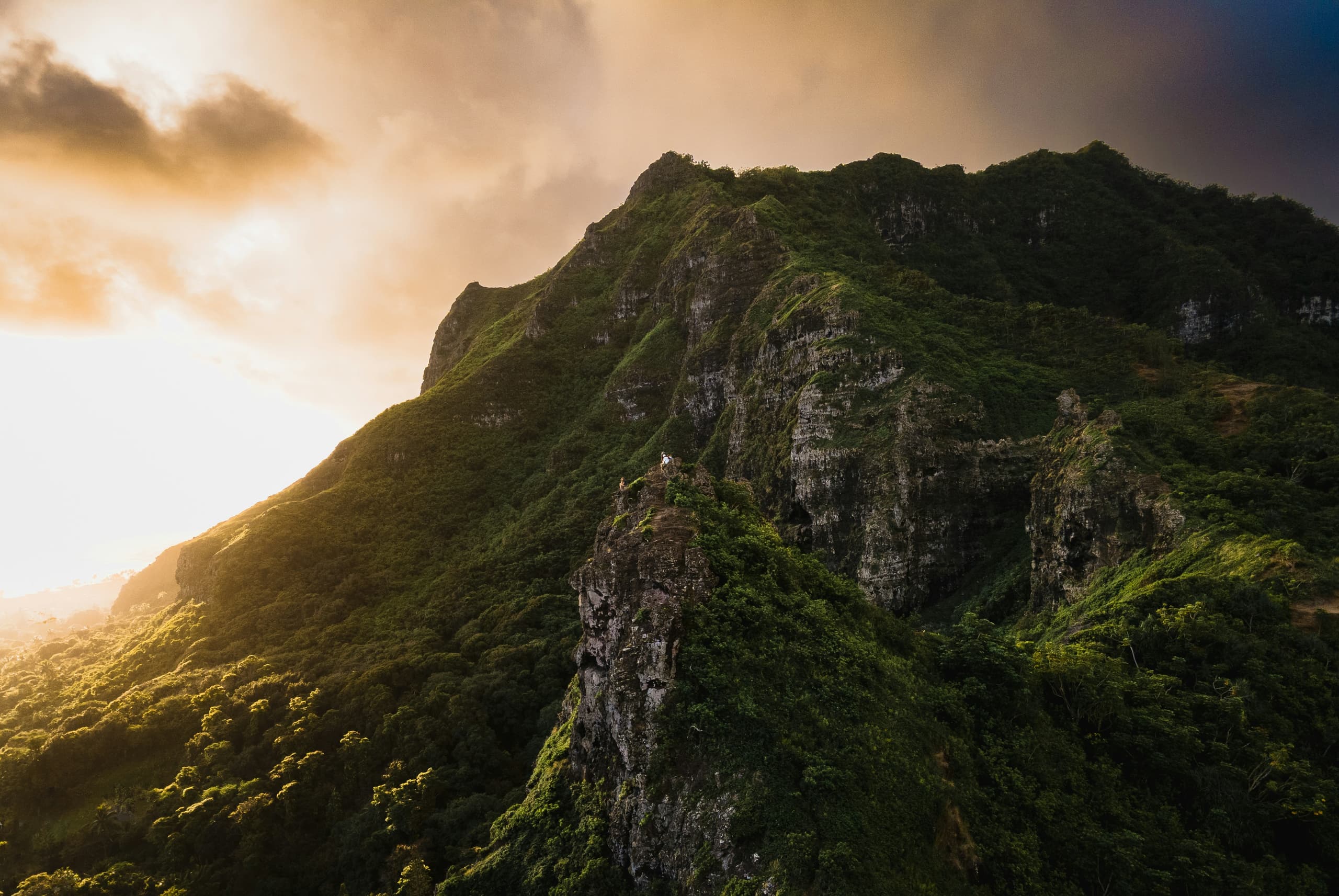
The hour before sunset is what everyone imagines when they picture a Hawaii aerial tour. Warm light, soft shadows, the ocean lit from the side, the sky starting to shade into pink and orange. It's the most photographed hour in the state, and with good reason. Nothing else looks like it.
There's a problem nobody tells you about: you're shooting it through a helicopter window. At golden hour, a helicopter cabin becomes a greenhouse of reflected light. The low sun hits the plexiglass at exactly the wrong angle. You end up with your own reflection in half your shots. You get rotor glare. You get glass haze.
Doors-off helicopters solve the reflection problem for passengers on the open side. Even on a doors-off flight, you're positioned by weight in a specific seat — you don't always get the open side, and you're sharing the aircraft with 3 to 5 other passengers whose angles compete for yours. Late-afternoon doors-off flights are fantastic, but the golden hour doesn't quite land the way it should.
Why the Open Cockpit Owns Golden Hour
There's one kind of aircraft on Oahu that doesn't have a glass problem. The gyroplane at Dillingham Airfield has no cabin at all. No windshield reflecting low sun into your lens. No glass haze softening the contrast of warm light on a dark cliff. No other passenger in your frame. No rotor in your way.
At 1,000 feet — lower than the helicopter cruise altitude — the late-afternoon light hits the reef at a sidelight angle that makes individual coral formations cast long shadows across the sand. The air goes warm around you as the day's heat rises from the island. The ocean reflects the color of the sky in a way that photographs flatten but the eye remembers for years.
The gyroplane discovery flight is a single-passenger operation. You're not sharing angles with anyone. The pilot-instructor sitting in front of you will bank into a turn specifically so the sun hits the coastline at the angle you want. You can ask to circle a particular surf break again. You can ask to hold a turn while you shoot. This is not a sightseeing cabin. It's one person in the best seat in the sky.
The practical catch: Skyland Air runs a limited number of flights per day, and the late-afternoon slots are the first to sell out. If you're planning a golden hour flight, book as soon as you've got your trip dates. These slots don't stay open long.
Practical Planning: Weather, Wind & When to Book
A few practical notes that apply regardless of which time you choose:
- Trade wind forecast. Check the Oahu marine forecast the morning of your flight. Trade winds under 15 knots mean a smooth flight. 15–20 knots is acceptable but bumpier. Above 20 knots, operators may cancel or reroute.
- Book early in your trip. If weather forces a reschedule, you want a buffer day or two. Booking on your last day is a gamble you don't need to take.
- Wet season vs. dry season. November through March brings more showers and cloud cover, especially in the morning. April through October is drier and clearer — morning visibility is consistently excellent.
- Tides matter for reef visibility. Lower tides expose more reef and shallower water is clearer. Check the tide chart for your flight day if reef detail is important to you.
- Cloud cover over the Ko'olau. The windward side of the Ko'olau often has clouds stacking up against the mountains by late morning. If you're shooting the windward cliffs, earlier is better.
A Quick Month-by-Month Lighting Note
Summer months (June through September) give you the longest days, the latest sunsets, and the most consistent trade-wind patterns. Golden hour stretches out. Mornings are reliably clear.
Winter months (December through February) bring shorter days, earlier sunsets (as early as 5:50pm), and more variable weather. Winter also brings humpback whales migrating through the channels between the islands — visible from the air — and occasional days of dramatic storm clouds piling up against the Ko'olau that make for once-in-a-trip photos.
Shoulder seasons (April–May, October–November) are the quiet sweet spot: fewer tourists, mostly clear weather, comfortable temperatures, and the best availability across operators.
Frequently Asked Questions
What is the best time of day for an Oahu helicopter tour?
Mid-morning (8–10am) gives you the best combination of calm air, excellent visibility, and clear reef water. Golden hour (the hour before sunset) gives the most dramatic light but competes with wind and glass reflections in helicopter cabins.
Do helicopter tours on Oahu fly at sunset?
Some operators offer late-afternoon and sunset flights. Slots are limited and fill up fastest. Wind tends to be more variable at that hour, and helicopter cabin glass can pick up low-angle sun reflections. Open-cockpit gyroplanes avoid the reflection problem entirely.
Is it better to fly in the morning or afternoon?
Morning, for most visitors. Trade winds typically pick up through late morning and peak in early afternoon, producing choppier air. Morning flights also have clearer skies before cloud buildup over the mountain ranges.
What time is best for Oahu aerial photography?
Mid-morning for reef detail and clean, even light. Golden hour for dramatic sidelight and warm tones. Avoid midday — overhead sun produces harsh contrast that's hard to balance.
Should I book a sunrise flight?
If you can handle the early wake-up, yes. Sunrise gives the calmest air and softest light of the day. Fewer operators offer true sunrise departures, so you'll need to book ahead and confirm the earliest available slot.